
TL;DR
Use AI to improve a real creator's portrait, not to invent a founder, team member, or campaign milestone. Compare the result with current photos, preview the profile crop, and check Kickstarter's live rules before submission. A straightforward camera photo remains a good choice when it already looks clear and recognizable.
A Kickstarter creator portrait should make the person behind a project easier to recognize. An AI photo generator for Kickstarter creator profiles can help prepare a consistent image for a profile and biography, provided the result stays faithful to the creator's appearance. Looktara is an option to consider within that portrait-preparation workflow.
AI creator portrait: An AI-generated or AI-edited image intended to represent a real project creator while preserving recognizable facial features.
The practical goal is modest: a clear face, suitable framing, and a presentation that matches the creator's public identity.
Table of Contents
What makes a Kickstarter creator portrait trustworthy?
A trustworthy Kickstarter creator portrait represents the actual person responsible for the project, with recognizable features and a setting that doesn't imply unearned credentials or campaign progress. Visual polish should support identification. The portrait, creator biography, and project materials should tell a consistent story about who is involved.
Choose the image method by its purpose
A profile portrait introduces a person; a campaign photograph can document an event, product, or activity. Keeping those roles separate prevents an attractive illustration from being mistaken for evidence.
| Image approach | Best use | Review priority |
|---|---|---|
| Original camera photo | A direct, recognizable introduction | Lighting, crop, and background |
| Lightly edited photograph | Improving an already suitable portrait | Preserve facial shape and skin detail |
| AI-assisted portrait | Creating a consistent presentation from real references | Check identity against recent photographs |
| Fictional avatar | Clearly labeled creative branding | Keep separate from the real creator's identity |
A fresh phone photograph can be enough. AI isn't necessary when an existing image already communicates the creator's identity clearly.
Treat facial details as identity details
Teeth, glasses, hairlines, facial proportions, and visible distinguishing features deserve close inspection. A portrait that changes a familiar smile may look polished but feel like a different person.
Research context supports taking representation seriously: Harry H. Jiang, Lauren Brown, and Jessica Cheng's 2023 paper, AI Art and its Impact on Artists, examines AI art and its relationship with artists. It isn't a Kickstarter conversion study and supplies no basis for promising more pledges.
The strongest creator portrait is recognizable before it is impressive.
How should creators prepare an AI-assisted portrait?
- Select recent reference photographs of the actual creator.
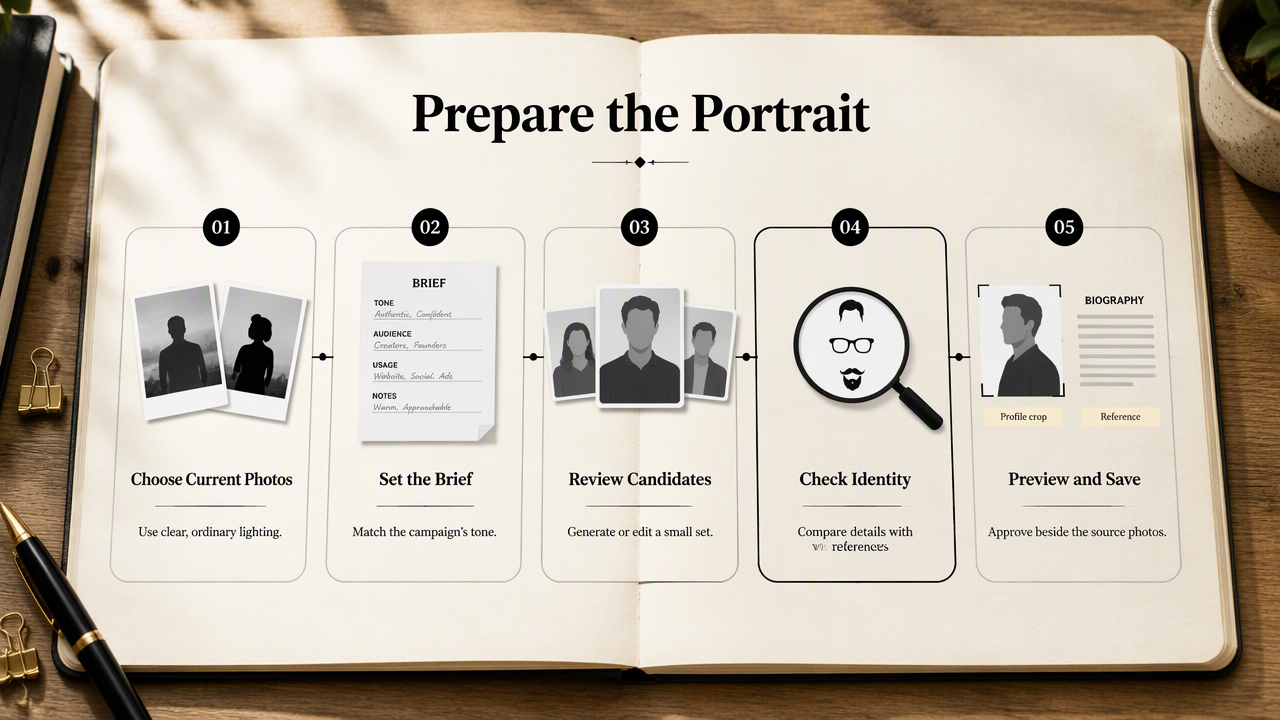
- Choose a simple portrait brief suited to the campaign.
- Generate or edit a small set of candidates.
- Compare facial details with the references.
- Preview the profile crop and biography placement.
- Save the approved image alongside its source photographs.
Build a reference set around current appearance
Use clear photographs with ordinary lighting and a consistent, current appearance. Include the hairstyle, glasses, or facial hair that backers will see in campaign videos and updates. Follow the selected service's actual upload requirements rather than assuming every generator needs the same number of images.
Reference files should belong to the creator or be used with permission. A team member's portrait needs that person's approval, including approval of the final generated version.
Write a brief that preserves identity
A useful portrait brief describes presentation rather than a new identity:
- Preserve the subject's facial proportions, age, hairstyle, and natural smile.
- Use soft lighting and a plain, uncluttered background.
- Show ordinary clothing appropriate to the creator's role.
- Keep the face clearly visible with space around the head.
- Exclude extra people, logos, badges, and text.
For example, a tabletop-game designer could request a relaxed portrait against a neutral background. A fitness-product founder might choose simple activewear, without implying a certification or competition result.
Preview every intended placement
Check the image at small size and in the live upload interface. Keep eyes and distinguishing features inside the crop, and confirm the current file-format and size requirements there.
A fitness campaign founder coordinating professional profiles can also explore LinkedIn profile imagery for fitness professionals. Consistent presentation helps connect the same real person across platforms; identical cropping isn't required.
What Kickstarter policy checks are needed in 2026?
Kickstarter policy checks in 2026 should cover AI disclosure, accurate representation, image rights, and the current requirements shown during project submission. The supplied research doesn't include Kickstarter's live policy text, so this guide cannot confirm a particular disclosure obligation. Creators should check the official rules and submission prompts before publishing.
Separate policy verification from portrait approval
A visually acceptable image isn't proof of platform compliance. Review current Kickstarter guidance directly, record the review date, and read any AI-related questions in the submission flow. If the treatment of a generated portrait remains unclear, seek clarification from Kickstarter before relying on an assumption.
A plain-language disclosure, when required or chosen for transparency, should accurately describe the process. For an edited photograph, wording such as Creator portrait edited with AI from photographs of the actual creator is more informative than a vague AI label. That wording is a suggested description, not an official platform requirement.
Keep portrait styling separate from campaign evidence
An invented workshop, fictional employee, or generated photograph of a nonexistent product demonstration can suggest facts that aren't true. A biography should name actual participants and describe real responsibilities. Portrait styling must not manufacture qualifications, partnerships, customer activity, or production progress.
For game projects, Pippin Barr's 2023 book The Stuff Games Are Made Of provides background on games as creative works. It isn't guidance on Kickstarter image policy. Concept art, creator portraits, and photographs documenting development should remain clearly distinguishable.
Complete the pre-submission checklist
- Confirm every pictured team member exists and has approved the image.
- Match names and roles to the biography.
- Verify permission to use reference photographs.
- Compare teeth, eyes, glasses, and facial shape with current photos.
- Check background details for implied claims.
- Review current Kickstarter policies and submission questions.
- Add any applicable disclosure and inspect the uploaded crop.
An organized review gives the creator a clear approval record: the chosen portrait, permission notes, policy-check date, and final biography can be stored together.
How Looktara handles this portrait workflow
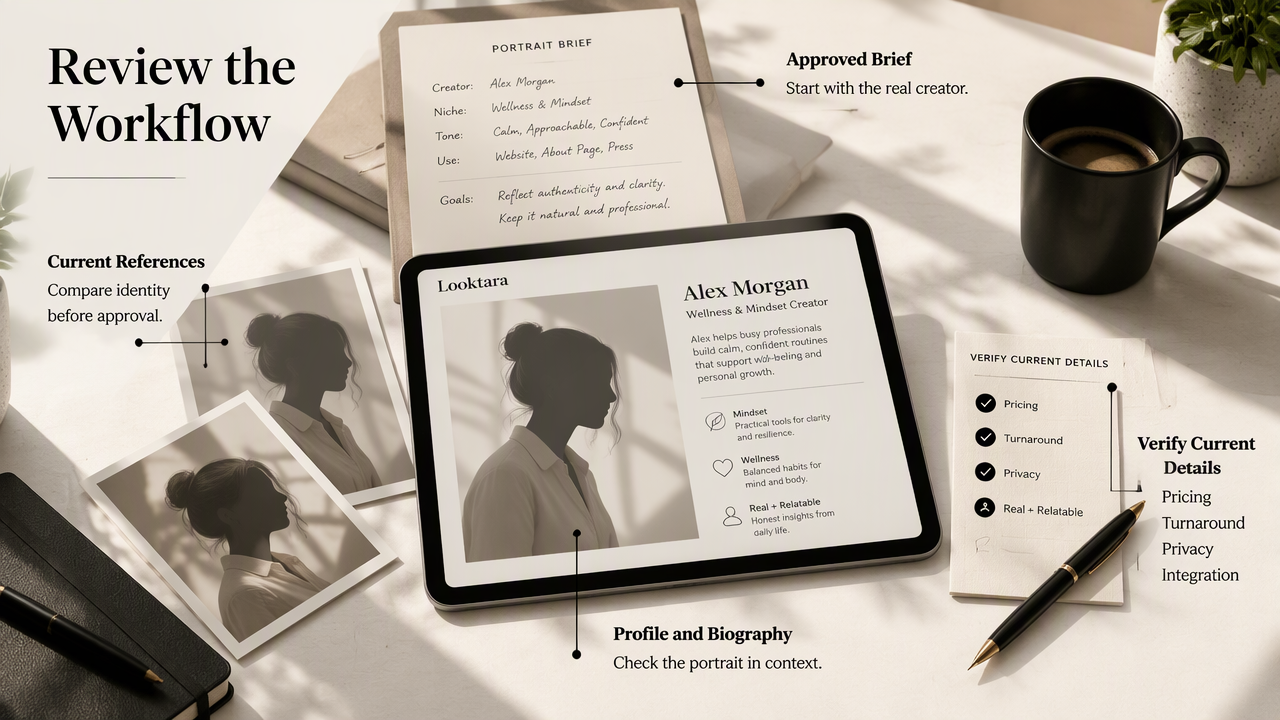
Looktara fits this use case as a portrait-generation option for creators preparing a consistent public-facing identity. The useful starting point is an approved brief for the real creator, followed by a review against current reference photographs. A simple portrait can then support the creator profile and biography.
Evaluate the service around campaign needs
The Looktara platform should be evaluated through its current service information and available output examples. The supplied research doesn't establish specific pricing, turnaround times, privacy terms, or a Kickstarter integration, so those details need direct verification.
Before selecting any service, a creator can check:
- Reference-photo requirements and available portrait styles.
- Image-use rights for a public campaign.
- Current storage, retention, and deletion terms.
- Export options suitable for the intended placements.
A clean, neutral portrait brief keeps the evaluation focused on likeness and presentation rather than elaborate scenery.
Carry the approved identity into campaign communications
The final portrait can provide a consistent visual introduction across a biography and related communications. A fitness entrepreneur maintaining a subscriber audience may find fitness newsletter profile imagery relevant to that follow-up workflow.
The practical deliverable is an approved portrait file, a suitable crop for each placement, and a short biography grounded in the creator's actual role.
FAQ: AI portraits for Kickstarter creators
AI portrait decisions should prioritize recognizable identity, accurate context, and verified platform requirements over visual novelty.
Can a generated portrait replace a real creator photograph?
A generated portrait can serve as a visual introduction when it faithfully represents the real creator, but suitability depends on current platform requirements and the image's context. It should not replace documentary photographs used to establish real-world activity. A clear camera photo remains a sensible choice when identity preservation is uncertain.
Does an AI creator portrait need a disclosure?
The answer depends on Kickstarter's current rules and submission requirements, which aren't included in the supplied research. Creators should check the live policy and AI-related prompts before submission. Any disclosure should describe the actual process clearly and distinguish an edited photograph from an image generated using reference photographs.
What should happen if AI changes the creator's teeth?
The altered image should be rejected or corrected before publication. Teeth can be a recognizable part of a person's smile, so a more symmetrical result isn't automatically a better portrait. Compare the candidate with a recent smiling photograph, request preservation of natural dental features, or select a faithful alternative.
Conclusion
Prepare one recognizable portrait before building variations. Compare it with current photographs, approve the biography, and complete the live platform-policy check. Creators considering Looktara can visit looktara.com to review the service, then select a neutral portrait brief and assess the result against the submission checklist.
Generated by EarlySEO.com